Guide to hiking Salkantay Mountain – Peru

Trekking Salkantay Mountain.

Salkantay Trek is one of the best multi-day treks in Cusco – Peru that starts from Cusco Hidrohelectrica to Aguas Calientes, a gateway to Machu Picchu. Our Salkantay Path travel guide includes everything you need to know; practical information, itinerary, useful tips, trail length, difficulty, altitude.


Salkantay Trek was known as an alternative trek to the famous Inca Trail, taking travelers from all over the world to the mysterious lost city of the Incas, Machu Picchu.

Salkantay Trek is definitely not just an alternative for those who cannot afford it or who cannot plan their vacation several months in advance. This trek is feasible to make a reservation a week before arriving in Cusco.

This Hike was even recognized by National Geographic Adventure Travel magazine naming it among the 25 best hikes in the world!

Salkantay Trek is an option for hikers who want to experience the beautiful mountain landscape of the Andes and the Peruvian jungle, see incredibly diverse nature and landscape that gradually reveal breathtaking views.

Everyone who visits Peru wants to see this ancient Inca citadel, and we feel that walking the Salkantay Trek will be the best and the only correct path that will take us to this incomparable wonder of the world.

This route offers a lot of Peruvian nature, and invites you to learn more about the flora, fauna and traditional way of life in the Andes.

In the end, the Salkantay Trek will exceed our expectations in every aspect.

Salkantay Trek.

We recommended to visit Peru for more or less two months to see many interesting places there are, such as the other best way to get to Machu Picchu.

The most important thing about the Salkantay hike, it is not necessary to book so far in advance; Sometimes, you can even decide with a week to go. be careful now there are new rules for entering Machupicchu  need to check of availability.

The price is also not that high compared to the Inca Trail and, as we have experience with both, we find that Salkantay Trek is also a little more relaxed in terms of atmosphere among travelers a mix of Andes and jungle.

Before you go, you should definitely read our post on Inca Trail vs. Salkantay Trek, which of these treks to Machu Picchu is better. Simply put, there are several reasons why you should include this adventure in your Peru itinerary.

In this travel guide, we have put together everything you need to know before taking the Salkantay Trek. From what to expect, the Salkantay Trek itinerary, how to choose the travel company, what to pack, whether it is better to trek alone or with a guide depends on your choice.


Recommendations for the Hike to Salkantay.

Salkantay Trek it is 62 kilometers long, assuming you start a trek from a small town of Soraypampa to Aguas Calientes. The official length is 74 kilometers in case your itinerary begins in Mollepata.

To reduce costs, some travel agencies start the hike in Mollepata, but if you are part of the guided tour and book with a reputable company, it is common to start in Soraypampa.

On the other way, independent travelers usually opt for the longer version of the Salkantay Trek from Mollepata because its simply the point where the bus from Cusco stops.

Salkantay Trek usually takes three to four days to finish; the most common variant is the longest.

Then, unless you want to visit Machu Picchu immediately after arriving in Aguas Calientes, you will need to add another day; This is important to know if you’re just starting to plan your itinerary.

Prepare to walk for approximately six to nine hours every day, so at least a basic level of fitness is required.

If you know that you are not in shape, you have other options to do the bus tours, of course it is not the same as this hike, but you cannot imagine visiting Peru without hiking to Machu Picchu. We recommend that you start improving your level of physical fitness by less. one month before the trip.

Although traveling usually means pushing your limits, the bottom line is that you should enjoy it, not suffer all the time.

The highest point passed on the Salkantay Trek is more than 4600 meters above sea level, the Salkantay Pass, so it is necessary to be well acclimatized, but we will talk about that later.

In just four days you will be able to see with your own eyes an incredible diversity of Peruvian nature in terms of flora and fauna.

We descended little by little into the cloud forest, tropical jungle and finally into the jungle from the inhospitable and harsh mountainous environment.

In a single sentence: Salkantay Trek will not disappoint you in terms of nature and spectacular views of the Mountain.


Aclimatization.

We’ve already mentioned the highest point of the hike and we think it’s worth talking a little more about acclimatization and the threat of altitude sickness.

Try to arrive in Cusco at least two or three days before the hike begins and focus on doing some physical activity in Cusco. To start, the Ruins of Sacsayhuamán are an incredible place to visit.

You can take many day trips from Cusco and give your body some time to adapt to the altitude.

There are many things to do in the Sacred Valley near Cusco; We can recommend an uphill hike to the Ruins of Pisac or visit the Rainbow Mountain,  inkiltambo hike that is near from Cusco.

It is also recommended to drink the coca tea. That you find in your accommodation or any place that is well known.

Proper acclimatization is very important (you’ve probably already noticed that we never skip this part when we hike at higher altitudes) because you will spend the first night at 3800 meters above sea level.

The next day, you will cross the mountain pass and sleep at about 3900 meters above sea level, which is really high for an unprepared hiker.

Although no one can know how the altitude will affect you, it is always best to be prepared and know what to expect (you may experience a headache or shortness of breath).

Don’t recklessly run the risk of altitude sickness.

Travel Insurance.

We never leave home without travel insurance which was designed to cover our expenses if something goes wrong during the trip.

Travel insurance protects against theft, flight delays, accidents, injuries, illnesses, cancellations and much more.

It is important that each Passenger has their own insurance; there are many other companies that offer travel insurance so that travelers cover the essential elements of their trip, including sports and adventure activities.

For Salkantay Trek, make sure your travel insurance covers high altitude treks (more than 4000 meters above sea level).

Travel responsibly, smartly and safely!


Guided Tours.

for this Trek walk with a guided group is the most comfortable option to enjoy the Salkantay Trek. Generally, the most difficult thing will be to find the right, professional and honest tour operator, but there is one.

Always remember that you will get the service you paid for; Sometimes it’s not worth saving a couple of dollars and ruining the entire trip and not-so-great experience.

To go on the tour, you don’t need to worry about food, transportation, camping or equipment (the tent is usually in the price, you just need to rent a sleeping bag with bedding, mats or walking poles ). if required).

Always check with the agency you take if the bus from Aguas Calientes to the gate of Machu Picchu and the entrance to Machu Picchu is included in the final price. You will also walk only with your backpack, since travel agencies have porters who carry your extra clothes for you.

What can be a disadvantage of hiking with a company? You never know who your hiking companions will be and what their fitness level will be.

If you don’t get the service you paid for, you won’t be able to do much with it while you’re in the mountains.

Obviously, this alternative is more expensive; On the other hand, you don’t have to worry about anything other than the hike itself.

The good thing is that all the service is with the Guide, he is in charge of the entire group, watching everyone how it is going and if someone is wrong, he solves it, they are in charge of the porters in the area.

For the walk, do not carry many things such as cosmetics, something that is not needed for the mountain, only what is necessary so that it does not weigh you down, as well as not paying extra porter on the route.



Guide to the Sacred Valley of the Incas.

Guide to the Sacred Valley of the Incas.

The Sacred Valley in Cusco-Peru, it is the gateway toMachu Picchu.

The Sacred Valley travel guide include the best things to see and to do, but also tips on when is the best time to visit, where to stay or how to get around. Explore the beautiful ruins in Pisac, Ollantaytambo, Moray, Saqsaywaman, Chinchero or the salt mines of Maras.

Before starting our trip to South America, we had planned to do many things, but I had some plans to spend about two weeks in Cusco. we spent 2 months approximately.

Cusco and Sacred Valley are some of the most popular places in all of Peru, that’s no secret, but we found these places so captivating that we decided before we left to explore as many places as we could.

Without a doubt, the Sacred Valley should be on your travel itinerary to Peru.
The Sacred Valley has mysteries, Inca culture, counts ruins, stone terraces and the beautiful natural settings in the photogenic valley carved by the Urubamba River.

The Inca civilization’s combination of engineering skills, history, and incredible scenery have captured the attention of travelers for decades.

The Sacred Valley and Cusco have to be on every traveler’s wish list is the proximity to Peru’s emblematic site, Machu Picchu, and the world’s most beautiful Inca trail.

If you are planning to hike the original path to Machu Picchu, the Inca Trail, or want to enjoy the spectacular views along the equally beautiful Salkantay Trek, Lares trek, Ausangate trek in Cusco.

Simply put, this valley ‘can find many important attractions, stretching over approximately 100 kilometers, it is a destination not to be missed.

Since we have had enough time to explore the Sacred Valley, we have decided to share all our knowledge and recommendations with you, our readers, so you can start planning your trip.

This Sacred Valley travel guide includes practical recommendations and, most importantly, we share the best things to do.

Cusco One of the power place in Peru
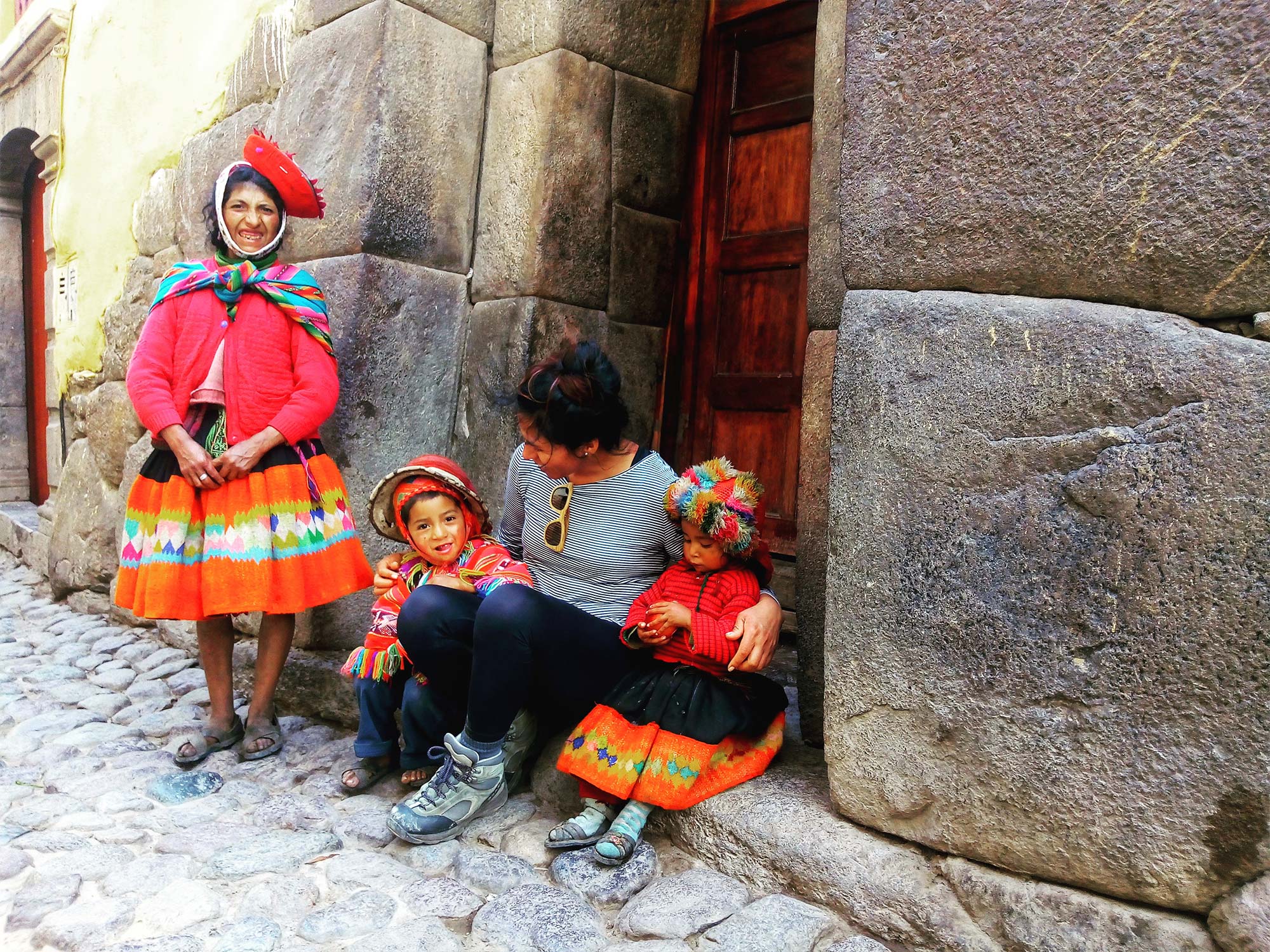
Cusco Andean People


WHAT TO DO IN CUSCO.

With out knowing Cusco first before starting the trip through the Sacred Valley, arriving in Cusco you can appreciate the infrastructure of the buildings as well as the friendliness of its people who are always friendly and upon arrival it is advisable to drink the coca tea that most travelers have. What to do to avoid altitude sickness.

The city of Cusco is an important tourist center for all travelers visiting Peru. The city is interesting on its own, but only after taking one of the many day trips from Cusco will you be able to appreciate the beauty of this ancient Inca region.

The city center of Cusco is full of churches, narrow and wide squares. The city is on the UNESCO list, although many buildings from the Inca era were destroyed by the Spanish who arrived in the 16th century and built churches and houses of European and colonial style in the depths of the Inca huacas.

A very interesting fact is that the buildings that remained from the Inca era survived several devastating earthquakes to this day. On the other hand, the new ones from the Spanish era had to be rebuilt repeatedly because they did not last until today, reconstruction continues.

Not only architecturally but also historically, Cusco is an extraordinary city. It was the capital of the Inca Empire from the 13th to the 16th centuries.

From this place the Incas ruled the entire Tahuantinsuyo empire, and during this time Cusco also flourished and many legends from that time remain to this day.

One of those legends, for example, says that the city was built in the shape of a puma, a sacred animal of the Incas.

Well, the easiest way, before starting to explore the Sacred Valley, is to climb a hill to the White Christ that dominates the city and see for yourself if it is true or not.

Saqsayhuaman Magic Incas Place.

TOUR TO THE SACRED VALLEY

A hundred-kilometer-long valley stretches from the ruins of Pisac and the city of Pisac (20 kilometers from Cusco) to the citadel of Machu Picchu.

In the time of the Incas, the valley was not only an important area for the construction of several checkpoints (today ruins or archaeological sites) and the main road from Cusco to Machu Picchu.

But thanks to the year-round microclimates, the constant source of water (from the Urubamba River) and two distinct seasons (rainy and dry), the area was (and still is) perfect for agriculture.

The Incas were people who were experts in growing plants, and when you travel through the valley, you can see the agricultural terraces, which, to us, are beautiful to see, but the local people still use them.


PISAC RUINS & TOW.

Pisaq is one of our favorite archaeological sites in the Sacred Valley. The Inca ruins are located on top of a hill above the city of Pisac, the central part is at the top, but other ancient buildings such as Inti Watana  and the Qollqas, Cemetery can also be seen from the top was one of the big and important Incas Cementery.

Due to its superior position, the main purpose of the Pisac Ruins was to protect the Cusco from possible attacks.

There are two alternatives to visit the Ruins of Pisac,

by car or on foot. If you have half a day and are reasonably fit, we highly recommend the latter option as it is very scenic.

But first you must get to Pisac. There is a path that leads directly to the entrance of the archaeological site.
The second would be to take a car from the town of Pisaq to the main entrance (30 minutes from Pisaq) to reach the Pisaq Archaeological Center.
the third can take a tour from Cusco (tours usually combine several sites, including Pisac, and cost around $28 when booked in Cusco)

The disadvantage if you take the tour from Cusco?

Because there are parts of ruins around the road leading to Pisac, there is no way you will be able to see everything, just the busiest section of the ruins.

Lastly, if you have a good physique and time, you can do this route walking from the town of Pisac to the ruins of Pisac, lasting more or less 4 hours round trip.

The entire trail leads uphill, so it’s a good way to prepare for other hikes high in the Andes. The distance from the city to the highest point of the ruins is 4 km, and the one-way trip will take you about two hours.

Of course, you can reach the entrance by car and walk only downhill. As you hike this trail, you’ll enjoy beautiful views, a nearly abandoned hike, and more ruins.

The city of Pisac is famous for its traditional markets, so if shopping is your thing, you shouldn’t forget to make a stop here.

It is easy to get to Pisac independently. Take a bus from Puputi Street in Cusco for S/6. The vans leave full from 7 in the morning.

To return to Cusco, take a regular minivan on the main road through Pisac.


OLLANTAYTAMBO.

It is very likely that you will visit Ollantaytambo more than once during your stay in Cuzco because most travelers take a train from here to Aguas Calientes, the town that serves as a base for visiting Machu Picchu.

But there is another reason to visit Ollantaytambo separately.

About a two-hour drive from Cuzco is an ancient Inca administrative center and an entry checkpoint to the Amazonian corner of the Inca Empire.

Therefore, it is best to combine this site with other attractions along the way.
The Ollantaytambo Ruins are a vast site characterized by an extensive set of agricultural terraces.

The differentiating element that is appreciated are the ancient warehouses, which can be seen from the ruins when looking across the valley; and also the Temple of the Sun which is at the top.

The most impressive sensation is when you are at the top of the ruins, looking across the valley, and when you realize that all the large stones come from the quarry on the other side of the valley, about 5 kilometers away.

From Cusco, Ollantaytambo can be reached by bus for S/15 from Grau street. We visited these ruins with a tour that included all the sites below plus Pisac (this we visited separately).

The tour costs S/80 per person and includes lunch.


Ollantaytambo was one of the most important places for the Incas.


MORAY.

In the sacred valley there are so many ruins that you cannot distinguish one from the other. But we can promise you that you will remember the Moray Ruins because they look different.

Although the terraces of the Moray Ruins are circular in shape, they served a different purpose. It is no secret that the Incas were geniuses in agriculture and plant cultivation, and today it is believed that they used those ruins as an agricultural laboratory. Each level of the terraces has a different temperature, a different microclimate and the design and orientation to the sun suggest that the Incas experimented with plants and crops here.

Experiments have also shown that the soil comes from various Peruvian regions, and although this region of Peru experiences flooding in the rainy season, the Moray Ruins are never flooded. Quite an interesting fact, right?
From here you can see almost the entire valley as well as the view of the mountains.

The easiest way to visit the Moray Ruins is to take a Sacred Valley Tour from Cusco. Otherwise, you have to take a minivan from Cusco to the town of Maras for S/7, and it takes about an hour. From here, you must take a taxi for S/50 to Moray, then you can walk down to salineras and then go out to Urubamba and take the bus back to Cusco.


Incas experimented with plants and crops here.


MARAS  SALT MINES.

This beautiful place in the Sacred Valley, which is not a ruin, is the salt mines in Maras, but it still has a connection with the Incas, who used this place to extract salt more than 500 years ago.

Today there are still miles of salt ponds belonging to hundreds of families living nearby.

Traditionally, salt mines had been available to anyone wishing to collect salt; the person had to be a member of the community and the size of the pond they got depended on the size of the family.

Although the salt mine is still in use and it is possible to buy salt in nearby stores, today the main source of income is tourism as salt is also exported.

The Tourist Ticket is not valid here and the entrance fee is S/11.

It is possible to harvest salt only during the dry season not in rain season, so when we arrived in mid-November, there were no people working, but still, the view of miles of salt ponds was incredible.

This place can  take  a tour from Cusco the costs is it$20
The other way is to take a bus from Cusco to Maras tow from there take a taxi cost. S/.50 soles.

The last one is to take the bus from Cusco – Maras and from there can go with a taxi to the town of Maras from there walk to the archaeological  of Moray and then can walk is all downhill to salt mines – and Urubamba – Cusco.

Salt mines in Maras, but it still has a connection with the Incas.


GUIDED TOURS.

You have already mentioned that there are several ways to explore the Sacred Valley, and as much as we like to explore places on our own, we opted for the tour because it seemed quite reasonable.

The price was not that high and it saved time.

I have carefully selected the most popular tours, so you can take a look at them and decide if you want to follow this route.

Remember that traveling independently is still an option. Like us, you can combine these transportation options.

Day trip to the Sacred Valley. The most popular way for most people to visit the Sacred Valley is with a tour, where you can see most of the attractions in a single day. You can join one of the top rated excursions from Cuzco.

Half-day excursion to Moray and the salt mines .Another popular way to visit one of the best attractions in the Sacred Valley is on a half-day tour.

Quad biking excursion. An exciting quad excursion to Moray and the salt mines is a popular alternative to a traditional tour.

Rafting excursion. Or you can do something more adventurous and enjoy the Sacred Valley from a completely different perspective by rafting the Urubamba River.

ATV tour in the Sacred Valley. This tour departs from Cusco for this activity.

One day rafting. It departs from Cusco and takes place in Cusipata, south of Cusco.
Rock climbing. It is done in series in the Sacred Valley.

Machu Picchu Inca Trail Recommendations

Inca Trail Recommendations Overview

The Inca Trail takes us through the magnificent citadel of Machu Picchu, this Inca city is recognized as one of the most emblematic hikes in the world.

Enjoy with Wayra Peru Travel, this adventure that will be a dream come true for all of you, as it will allow you to travel the ancient path built by our Quechua ancestors. Along the Inca Trail,  on this Inca Trail Recommendations you can appreciate the Andean landscapes, encompassing lush green jungles, vast valleys, and finally, you will end your visit to one of the Seven Wonders of the World.

This trail is an integral part of the Machu Picchu Historical Sanctuary and, as such, the Peruvian government has implemented regulations to ensure the preservation and protection of this notable area, as well as the safety of its visitors. Becoming familiar with these regulations provides us with valuable knowledge about permit availability, restrictions, and recommended travel times, among other essential topics, allowing us to make the most of this incredible trip.

Inca Trail Recommendations

Recent changes to the Inca trail trek regulations and Inca Trail Recommendations  include the following:

  • The Inca Route is limited to a maximum of 500 people, includ guide, cooks and authorized porters. This effectively restricts the number of tourists to approximately 200.
  • Inca Trail permit applications must be submitted and paid in full at least 48 hours prior to your intended entry date.
  • Once inside the Inca trek, visitors cannot extend their stay beyond the duration specified on their entry ticket, which corresponds to the prescribed route.
  • All participants of the Inca Trail must carry their original identification documents and present them at the Ministry of Culture checkpoints.
  • The Inca Trail may be subject to temporary restrictions or closures due to preservation and restoration efforts. Barring unforeseen circumstances, users will receive 30 days’ notice of such deadlines. However, force majeure events may result in immediate closure without prior notice.
  • Visiting the Inca Trail is  prohibited between 7:00 pm and 5:00 am, except in exceptional circumstances that can be verified.
  • All visitors to the Inca Trail trek, particularly representatives of travel agencies, are required to separate solid waste into organic and inorganic categories and remove it from the Historic Sanctuary of Machu Picchu.
  • By adhering to these regulations, we can contribute to the sustainable enjoyment of the Inca Trail 4 days, while ensuring its preservation for future generations.

With Wayra Peru Travel, you have these following options to visit the impressive Inca Trail

Get this exclusive Travel guide in PDF

If you want to visit only Machu Picchu, please check the availability in this page 

Inca Trail Itinerary for trekkers

cusco machu picchu peru

Overview about Inca Trail

Inca Path is Located in the Andes and the green valleys of the Andes Mountains, a historic trek for adventurers from around the world.
This ancient Inca trail, once traversed by the powerful Inca Empire, offers modern hikers the opportunity to immerse themselves in the landscapes and rich Peruvian culture.
Inca trail Trekkers by Wayra Peru Travel

Inca Trail Itinerary.

Day 1 :Cusco – Piscacucho (KM 82) – Wayllabamba

Our first day's hike takes us through rugged valley terrain, which will allow us to acclimatize to the altitude and immerse ourselves in the Inca route,
Along the way, we pause to explore ancient Incan ruins like Llactapata, where moss-covered walls whisper stories of a bygone era.

Day 2 : Huayllabamba – Warmi wañusca Pass – Pacaymayo

We Begin our second day  on this Inca Trail we will venture deeper into this section of the Inca Trail characterized by the tropical jungle, This Inca Trail Trek traverses dense foliage accompanied by the chatter of Andean birds and the whisper of invisible creatures, amidst the vegetation that envelops us in its hug.

When  we ascend higher into the mountains, each step brings us closer to our ultimate destination of the legendary Lost City of the Incas, Machu Picchu. In the way, we encounter the infamous Dead Woman’s Pass, a formidable challenge that tests our endurance and determination. With the support of our fellow trekkers and the unwavering of our knowledgeable guides, we conquer the summit and are rewarded with panoramic vistas that take our breath away.


Day 3: Pacaymayo – Phuyupatamarka – Wiñaywayna

Unveiling Mysteries As dawn breaks over the Andes, we resume our trek with a sense of anticipation, knowing that today holds the promise of discovering ancient wonders hidden amidst the mist-shrouded peaks. The trail leads us to the mesmerizing archaeological site of Runkurakay, where stone walls perch precariously atop steep cliffs, offering a glimpse into the ingenuity of the Inca civilization.

Continuing on, we pass through lush valleys and quaint mountain villages, pausing to interact with local Quechua communities and learn about their traditional way of life. Each encounter leaves an indelible mark on our souls, deepening our appreciation for the enduring spirit of the Andean people.

As the day draws to a close, we arrive at our final campsite near the Inti Punku, or Sun Gate, where we catch our first glimpse of Machu Picchu bathed in the golden light of the setting sun. With hearts full of wonder and excitement, we eagerly anticipate the culmination of our epic journey.

Day 4: Machu Picchu – Cusco

The Grand Finale The moment we’ve all been waiting for has arrived—the opportunity to witness the awe-inspiring beauty of Machu Picchu in all its glory. With eager anticipation, we set out on the final stretch of the Inca Trail, our footsteps quickening with each passing moment.

As we ascend the stone steps of the Sun Gate, the iconic citadel of Machu Picchu unfolds before us like a scene from a dream. Its terraced gardens, intricately carved stone structures, and majestic temples stand as a testament to the ingenuity and architectural prowess of the Inca civilization.

Together, we explore every corner of this ancient marvel, from the enigmatic Temple of the Sun to the sprawling terraces of the Agricultural Sector. With each step, we feel a profound connection to the past, as if the echoes of ancient footsteps still reverberate through the cobblestone streets.

As the day draws to a close, we bid farewell to Machu Picchu, knowing that our adventure along the Inca Trail has forever changed us. With memories etched in our minds and hearts, we descend from the mountaintop, grateful for the opportunity to have experienced the magic of this extraordinary place.

Conclusion

The Inca Trail is more than just a trek—it’s a journey through time, a testament to the resilience of the human spirit, and a celebration of the natural and cultural wonders of the Andes. As we bid farewell to this legendary footpath, we carry with us not only memories of breathtaking landscapes and ancient ruins but also a deep appreciation for the indomitable spirit of exploration that unites us all. Until we meet again, may the spirit of the Andes guide our adventures and inspire us to continue seeking out the wonders of the world.

Inca Trail Tours

With Wayra Peru Travel, you have these following options to visit the impressive Inca Trail